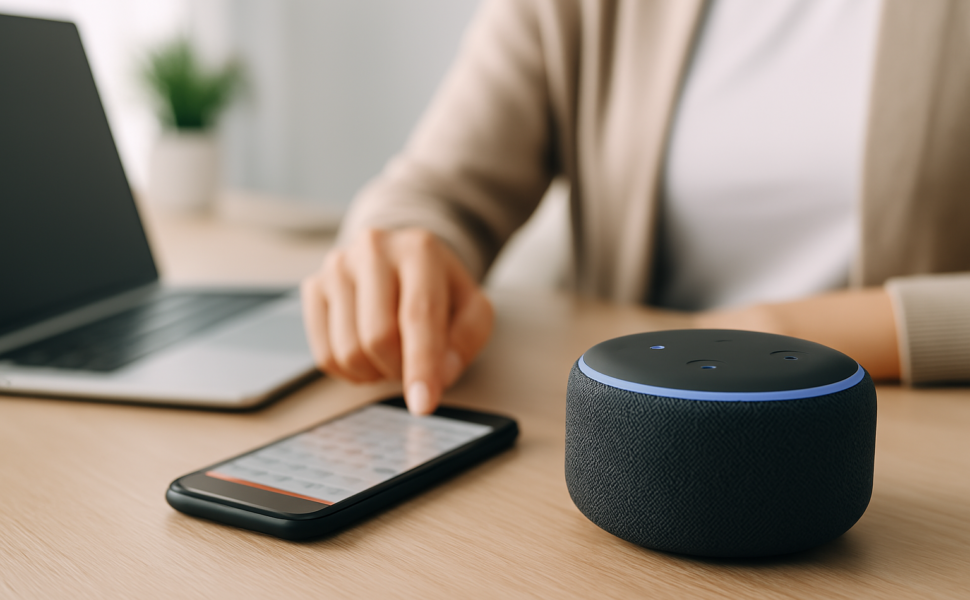



Every missed call represents a potential lost opportunity. For small business owners, these lost connections aren’t just minor inconveniences—they’re direct hits to your bottom line. Let’s explore why your phones might be going unanswered and how this seemingly small issue could be costing you more than you realize.
The True Cost of Missed Calls
Before diving into the reasons behind missed calls, let’s understand what’s really at stake. When a potential customer calls your business and no one answers, studies show that 85% of those callers won’t call back. Instead, they’ll simply move on to your competitor.
Each of these missed opportunities represents not just a single lost transaction, but potentially the lifetime value of that customer—including referrals they might have made. For a salon, contractor, restaurant, or retail shop, this can easily translate to thousands of dollars walking out the digital door every month.
You’re Understaffed During Peak Hours
Small businesses often operate with lean teams, which means when things get busy, something has to give. Unfortunately, that “something” is often answering the phone. When your staff is handling in-person customers, managing operations, or providing services, they simply can’t be in two places at once.
Maria, a hair salon owner in Portland, discovered that her busiest appointment times were also when the highest volume of calls came in. “We were losing appointments because potential clients would call while my stylists were with customers. By the time we could return calls, many had already booked elsewhere.”
The Impact
During your busiest hours—when you’re demonstrating the full value of your business to customers—you’re also most likely to miss incoming calls. This creates a frustrating paradox: your success during peak times actively limits your ability to grow beyond those peaks.
After-Hours Inquiries Fall Into a Black Hole
Business hours don’t align with everyone’s schedule. Many of your potential customers are busy professionals who can only make calls during their lunch breaks, after they finish work, or on weekends. If your business operates traditional 9-5 hours, you’re likely missing all those evening and weekend inquiries.
Take Jake’s Plumbing Services as an example. Jake noticed that a significant number of his competitors’ negative reviews mentioned unavailability for emergency calls. When he analyzed his own call logs, he realized that over 40% of potential customer calls were coming in after 6 PM.
The Impact
Every after-hours call that goes to voicemail represents a customer with an immediate need. If they’re calling about an urgent matter—like a restaurant reservation for that evening or an emergency service call—they’ll likely keep dialing until they find someone who answers. By the time you check your messages the next morning, that opportunity has vanished.
Your Team Is Overwhelmed by Non-Essential Calls
Not every call requires your personal expertise, yet traditional phone systems funnel everything through the same channel. Your team ends up spending valuable time answering basic questions about your business hours, location, services, or prices—information that could be easily automated.
A medical clinic in Austin found that over 65% of their incoming calls were simple appointment confirmations, rescheduling requests, or questions about services and prices. Their highly trained medical staff was spending hours each week on administrative phone tasks rather than patient care.
The Impact
When your team is constantly interrupted by routine calls, they can’t focus on delivering excellent service to customers who are physically present. This divided attention reduces productivity and can negatively impact the quality of service your in-person customers receive, potentially creating a lose-lose situation where both callers and present customers feel underserved.
Your Call Handling Process Lacks Consistency
Without standardized call handling procedures, each team member might provide different information or experiences to callers. Some might excel at converting inquiries into appointments or sales, while others might struggle to capture key information or effectively communicate your value proposition.
Roberto, who owns a landscaping business, noticed significant variations in booking rates depending on which team member answered the phone. Some were booking 80% of inquiries into consultations, while others were converting less than 30% of similar calls.
The Impact
Inconsistent call handling creates uneven customer experiences and unpredictable business results. It also makes it difficult to identify and address specific problems in your customer acquisition process. Without consistency, you can’t optimize what’s working or fix what isn’t.
You Lack the Tools to Scale Your Availability
Traditional solutions to missed calls—like hiring a receptionist or using an answering service—come with significant limitations. A dedicated receptionist is expensive and still limited to working specific hours. Generic answering services often lack the specific knowledge about your business needed to truly help customers or capture leads effectively.
Sarah’s Boutique found that their answering service was taking messages but failing to answer the specific product questions that would have secured sales. Meanwhile, hiring a full-time receptionist would have cost more than 15% of their monthly revenue—an expense they couldn’t justify.
The Impact
Without scalable, intelligent call handling, your business faces a difficult choice: invest heavily in staff that might be underutilized during slow periods, or accept that you’ll miss opportunities during busy times and after hours. Neither option supports sustainable growth.
The Solution: AI-Powered Voice Assistance
The good news is that technology has evolved to address these exact challenges. Modern AI voice assistants can now handle natural conversations, provide consistent information, and operate 24/7 without the limitations of traditional solutions.
These AI assistants aren’t the clunky, frustrating automated systems of the past. Today’s technology can understand context, answer complex questions, book appointments, and even qualify leads—all while sounding remarkably human and reflecting your business’s unique tone and values.
How Voice AI Is Transforming Small Business Communication
For small businesses like yours, AI voice assistants offer several game-changing benefits:
- 24/7 Availability: Capture every opportunity, regardless of when customers call.
- Consistent Excellence: Every caller receives the same high-quality information and experience.
- Peak Time Support: Your human team can focus on in-person customers while the AI handles incoming calls during rush periods.
- Cost Efficiency: Significantly less expensive than hiring additional staff, with no benefits, training, or turnover to manage.
- Data Capture: Every call becomes a learning opportunity with detailed analytics on customer needs and questions.
Real-World Success Stories
- Local Salon: Increased bookings by 32% by implementing an AI assistant that handled after-hours appointment requests and answered common questions during peak times.
- Family Restaurant: Reduced missed calls by 87% and increased to-go orders by 23% using an AI system that could take orders and answer menu questions when staff was busy with dine-in customers.
- Home Services Contractor: Qualified leads more effectively by having their AI assistant gather key project information upfront, allowing the owner to prioritize the most promising opportunities.
Taking the Next Step: Implementing Voice AI in Your Business
Many small business owners assume that advanced technology like AI voice assistants must be complicated to set up or require technical expertise. With modern solutions like Axxent.ai, that’s no longer the case.
Today’s AI voice assistants are designed specifically for small businesses, with simple setup processes that don’t require coding or technical knowledge. They can be customized to reflect your business’s personality, trained on your specific services and policies, and integrated with your existing tools like calendars and CRM systems.
Is Your Business Ready for AI Call Assistance?
If you’re experiencing any of the call-related challenges we’ve discussed, you might be an ideal candidate for an AI voice assistant. Consider these questions:
- Do you frequently discover missed calls at the end of the day?
- Is your team sometimes too busy with in-person customers to answer the phone?
- Are you losing potential business during hours when your business is closed?
- Do you spend significant time answering the same questions repeatedly?
- Would your team be more productive if they could focus on their primary responsibilities rather than phone interruptions?
If you answered “yes” to any of these questions, an AI voice assistant could be the solution that helps you capture those missed opportunities without adding staff or overwhelming your current team.
Conclusion: Never Miss Another Opportunity
In today’s competitive business environment, being available when your customers need you isn’t just good service—it’s a crucial competitive advantage. Every answered call represents a potential new customer, while every missed call is an open door for your competition.
With the right tools, your small business can deliver the responsiveness and availability that today’s consumers expect, without stretching your team or budget beyond their limits. An AI voice assistant works tirelessly to ensure that every call becomes an opportunity, not a regret.
Ready to stop missing calls and start growing your business?
Explore how Axxent’s voice assistants can help your business capture every opportunity with our easy-to-implement, affordable AI solution designed specifically for small businesses like yours.
Want to learn more about how AI can transform other aspects of your small business operations? Check out our other articles on leveraging technology for growth, or schedule a demonstration to see our voice assistant in action with your specific business needs.