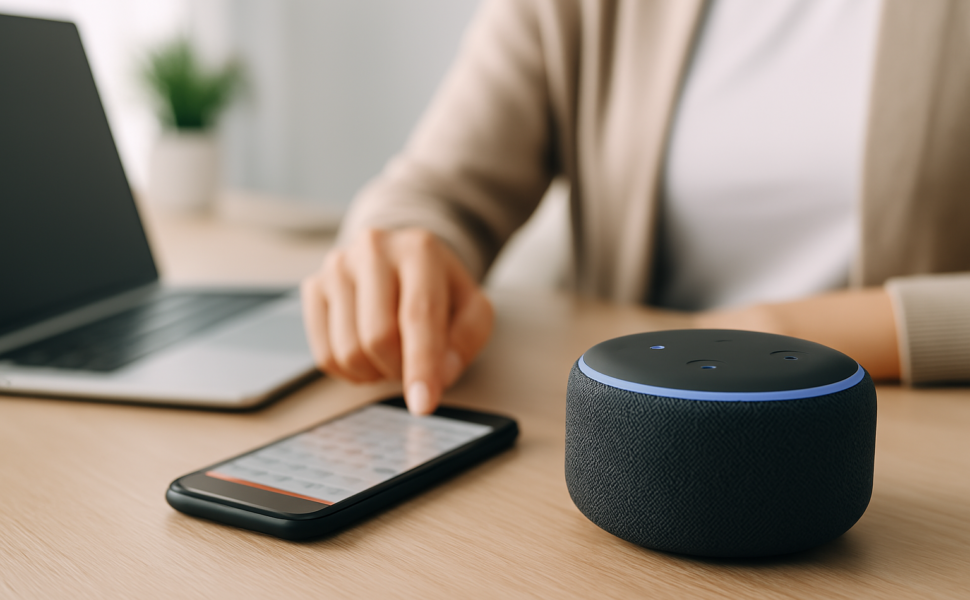



In the bustling world of small business, where every ring of the phone could be a golden opportunity, AI voice assistants have emerged as the unsung heroes—or should we say, the perfectly tuned sidekicks? Gone are the days when customer interactions felt like a game of telephone tag. Today, these intelligent systems are evolving rapidly, blending seamlessly with human ingenuity to supercharge efficiency and delight customers. Let’s trace this fascinating journey and explore how voice AI is transforming small business landscapes, one natural conversation at a time.
From Robotic Relics to Conversational Companions: The Early Evolution
Remember the clunky interactive voice response (IVR) systems of yesteryear? Those menu-driven mazes where “press 1 for frustration” seemed like the only option? They marked the humble beginnings of AI voice assistants in the late 20th century, primarily designed for basic call routing in large enterprises. While effective for simple tasks, they often left callers feeling like they were talking to a brick wall—albeit one with a synthesized voice.
Fast-forward to the 2010s, and the game changed with the rise of consumer-facing assistants like Siri and Alexa. Powered by advancements in natural language processing (NLP) and machine learning, these tools began understanding context and intent, not just keywords. For small businesses, this shift meant the dawn of accessible AI voice assistants that could handle real-world queries without requiring a Fortune 500 budget. It’s like upgrading from a tin can telephone to a crystal-clear conference call—suddenly, customer interactions became more intuitive and less infuriating.
Modern Marvels: How AI Voice Assistants Are Getting Smarter
Today’s AI voice assistants are light-years ahead, thanks to breakthroughs in deep learning and cloud computing. They don’t just respond; they converse. Trained on vast datasets of real-world dialogues, these systems grasp nuances, accents, and even sarcasm (though we’d advise against testing that last one on your customers). For small businesses, this means deploying voice AI that integrates effortlessly with existing tools like calendars, CRM systems, and payment gateways.
Picture this: A salon owner no longer juggles a ringing phone while mid-haircut. Instead, the AI voice assistant checks availability, books appointments, and sends reminders—all while sounding as polished as a seasoned receptionist. In restaurants, it streamlines order processing, handling takeout requests after hours without missing a beat. The key here? Efficiency amplified through tandem operation: AI tackles the repetitive, time-sensitive tasks, freeing human teams to focus on what they do best—building relationships and innovating.
This synergy isn’t about replacement; it’s about elevation. Humans bring empathy and creativity to the table, while AI provides tireless consistency. Together, they create a powerhouse duo that boosts productivity without breaking a sweat. Small businesses, often strapped for resources, find this particularly game-changing—turning potential missed calls into converted sales and satisfied patrons.
Boosting Customer Interactions: The Efficiency Equation for Small Businesses
At the intersection of technology and customer service lies the true power of evolved AI voice assistants: enhanced customer interactions that drive results. For small businesses in service-based industries—like healthcare clinics, home services pros, or retail shops—these tools offer 24/7 availability, ensuring no query goes unanswered. Imagine a plumber’s line buzzing at odd hours; the AI fields FAQs about services, qualifies leads by gathering key details, and routes hot prospects straight to the team. It’s efficiency with a wink—because who wouldn’t want a virtual assistant that’s always “on call”?
SEO-savvy small business owners will appreciate how voice AI optimizes interactions for better outcomes. By automating lead qualification through targeted questions, it identifies ready-to-buy customers, handing off warm leads that humans can nurture to closure. In education and coaching sectors, it schedules sessions and answers enrollment queries, reducing administrative drag. Restaurants benefit from seamless order processing, even capturing upsells like “Would you like fries with that?” without human intervention.
The beauty lies in the collaboration: AI handles the volume, humans handle the value. This partnership not only increases operational efficiency but also elevates customer experiences. Patrons get instant, professional responses, leading to higher satisfaction scores and glowing reviews. Data shows that seamless interactions can lift conversion rates significantly, proving that when AI and humans team up, small businesses punch well above their weight.
Real-World Wins: Voice AI in Action Across Sectors
Let’s get witty about it—AI voice assistants aren’t just theoretical; they’re the practical MVPs in diverse small business arenas. Take home services: A cleaning company deploys AI to book jobs, confirm details, and send confirmations, turning chaotic scheduling into a symphony of simplicity. In healthcare, it manages patient inquiries about hours, locations, and basic services, ensuring compliance while lightening the load on staff.
Retail and e-commerce thrive too, with voice AI answering product questions and processing orders, all while integrating with inventory for real-time accuracy. Professional services firms use it for lead gen, asking probing questions to qualify prospects before escalating to experts. And in real estate, it fields viewing requests, providing property insights that keep agents focused on closing deals.
These applications highlight how AI voice assistants evolve to fit niche needs, always in harmony with human oversight. By automating the routine, they empower small business owners to reclaim time for growth strategies, fostering a cycle of innovation and efficiency that’s as rewarding as it is smart.
Looking Forward: The Next Chapter in Voice AI Evolution
As we peer into the crystal ball (or perhaps the AI algorithm), the future of voice AI for small businesses looks positively vocal. Emerging trends point to even more personalized interactions, with multimodal AI combining voice with text and visuals for richer experiences. Integration with IoT devices could enable voice assistants to manage on-site services, while enhanced analytics will offer deeper insights into customer trends.
Yet, the core remains unchanged: AI as a collaborator, not a competitor. Small businesses adopting these advancements will see amplified efficiency, where humans and AI work side-by-side to deliver exceptional customer interactions. It’s an evolution that’s not just smart—it’s witty in its wisdom, turning everyday challenges into opportunities for triumph.
In wrapping up this sonic saga, the evolution of AI voice assistants underscores a timeless truth: Technology at its best enhances the human touch. For small businesses aiming to thrive in a fast-paced world, embracing voice AI isn’t just a trend—it’s a strategic symphony that harmonizes efficiency, satisfaction, and success. Ready to tune in? Your next customer interaction could be music to your ears.